Concrete CMS 9.5.0 is officially out. That's the headline this month. Here's everything else that happened.
9.5.0 Is Here, With a Patch Right Behind It
The most developer-relevant addition in 9.5.0 is Twig templating support in the core. You can now use Twig in blocks and themes. The core itself hasn't switched over to Twig yet, since that would be a backwards-compatibility break the team isn't ready to make, but for new theme and block development Twig is now a first-class option. Less boilerplate, and auto-escaping by default makes your output more secure without having to think about it. Andrew mentioned this with a self-aware note that he spent years arguing against PHP template languages, but Twig in 2026 is a different animal than Smarty in 2003.
9.5.0 also adds official PHP 8.5 support. Getting there was harder than expected, not because of the core itself, but because several dependencies were locked on older versions and needed to be swapped out. Concrete now uses Symfony Mailer instead of Laminas Mail (formerly Zend Mail for those of you who go back a while), along with a handful of other dependency swaps.
Some small issues surfaced post-release around the way certain blocks include other templates. Nothing catastrophic, but 9.5.1 is out now with those fixes plus a round of security updates. If you haven't updated yet, go straight to 9.5.1. Back up first, and test on staging before touching production.
Read the full 9.5.0 release notes or the release announcement on concretecms.org.
Learn More About Concrete
Interested in saving time and having a secure website? Learn what Concrete CMS can do for you.
Squash Week: It Worked
Back in April, Franz announced the team would spend the week of May 4th heads-down on long-standing bugs. The numbers: open pull requests dropped from around 25-26 down to 15, and open issues went from roughly 510-515 down to 470.
A significant chunk of that week went toward a long-standing annoyance: 404 pages in Concrete are slower than they should be. Given how Concrete handles page rendering, a request for a URL that doesn't exist can be surprisingly sluggish. Community member mlocati had opened a pull request with a smart reframing of the problem: instead of trying to make every 404 faster in every case, terminate the requests you know are going to fail as quickly as possible. Handle the obvious 80% fast and don't chase perfect coverage on every edge case.
Franz worked up a complementary approach building on mlocati's thinking, and the two are being evaluated side by side. Neither has landed in the core yet, but one way or another this gets fixed in the next minor release. Early tests show roughly 50% faster response times on those failed requests. Check out the forum thread if you want to follow along or weigh in.
The squash week format is something the team wants to keep doing. If you have pull requests sitting open or issues you care about, these are the moments to make noise.
Concrete Now Has an Official AI Policy
Concrete CMS has published an official AI policy, linked from the contributing guidelines on GitHub. The short version: not anti-AI, but contributors are asked to use it responsibly. When you submit a bug report, feature request, or pull request that involves AI-generated content or code, there are guidelines for how to handle that. The reasoning is practical: code quality and not burning out the reviewers who have to go through everything that gets submitted. Post to the forums if you have questions or reactions. Andrew is expecting some.
Community Thanks
GitHub activity this month came from janscarton, Deb0x1, JohntheFish, JeffPaetkau, nratering, m-kreis, and mlocati. Thank you all. The project runs on contributions like these.
Site in the Wild: Parkside Resort
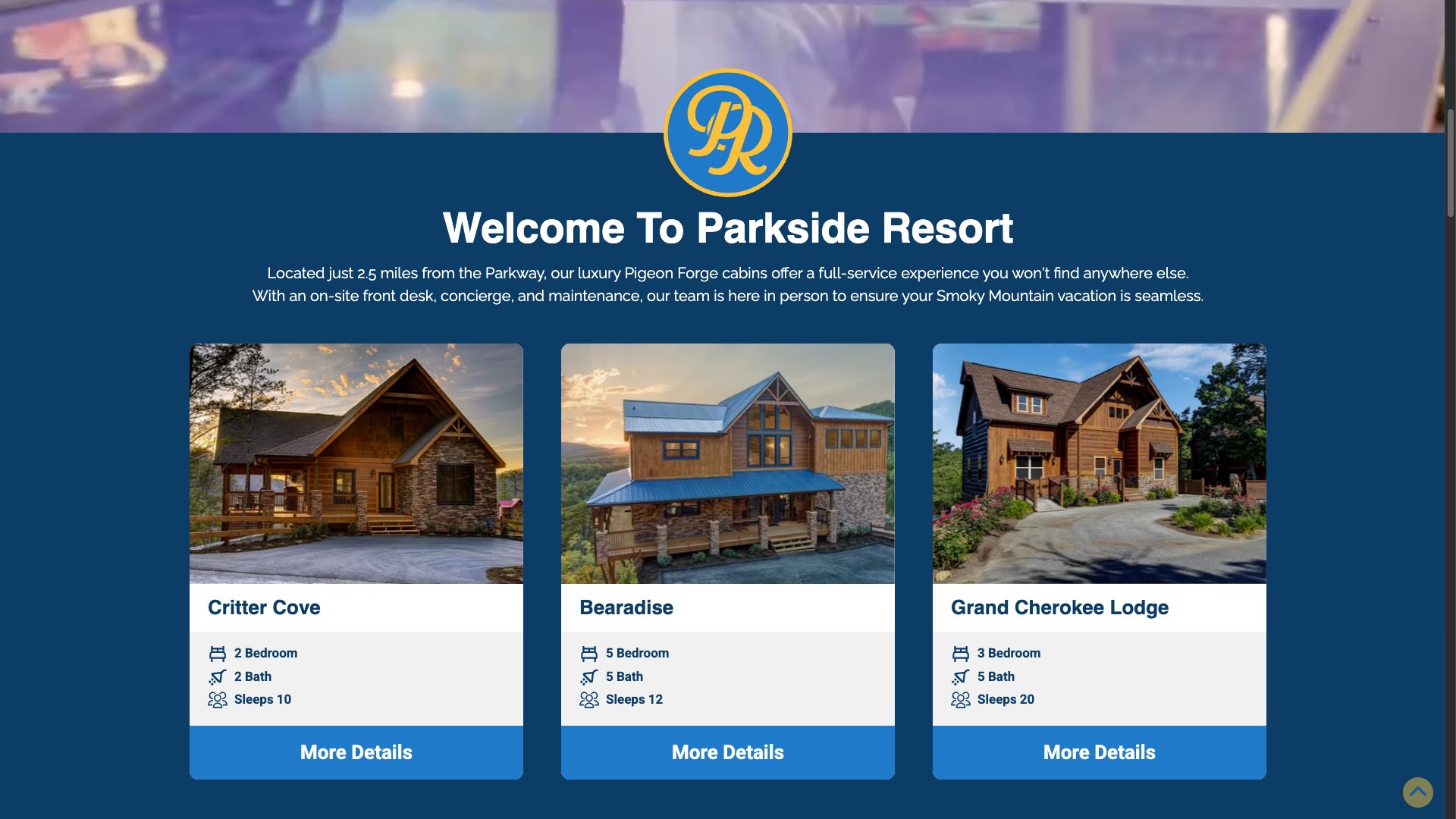
Parkside Resort in the Smoky Mountains of Tennessee, built by Anchorpoint Marketing. They focus specifically on vacation and hospitality websites, and it shows. The site is built around getting visitors from browsing to booking fast, with large imagery, clean layouts, cabin browsing with date selection and pricing, a specials section, and a blog leaning into SEO-driven content. Fast load times get a specific callout, which matters on a booking site where people are comparing options across multiple tabs. Nice work.