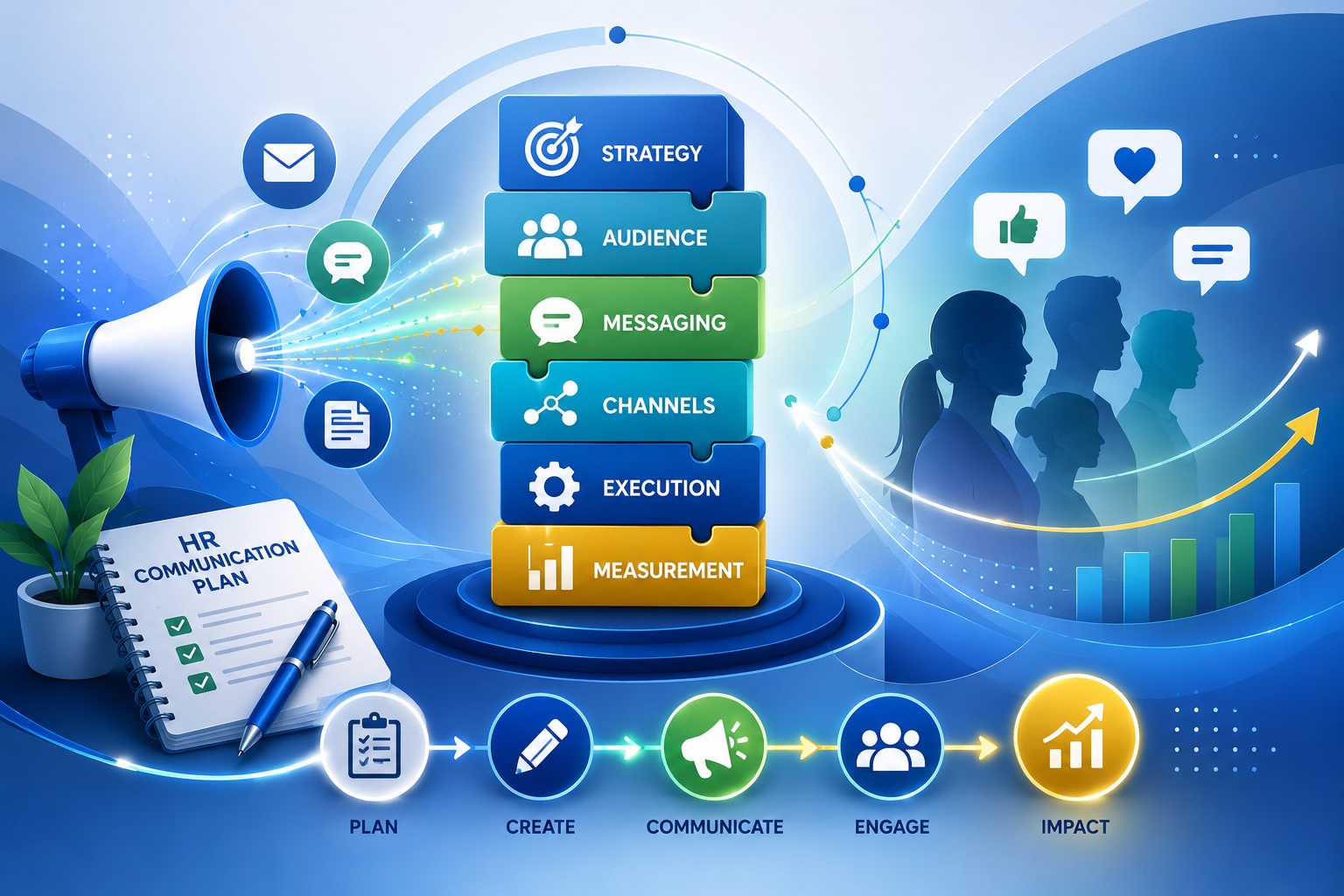
HR communication fails more often than it should, not because HR teams don't care, but because the structure isn't there to support it. Messages go out through too many channels. Documents live in email threads. Important updates reach some employees through the intranet, others through Slack, and some not at all. The result is a workforce that stops trusting HR communications to be complete, current, or worth reading.
A structured HR communication plan solves that. Here's how to build one that actually works, covering the right HR tools, the right channels, and the governance that keeps it from drifting back into chaos.
What Is HR Communication?
HR communication is how human resources teams share important company information with employees. That covers onboarding materials, benefits updates, policy changes, internal events, and company-wide announcements. At its core it's about connecting employees, building engagement, and keeping teams aligned with what the organization is doing and why.
The stakes are higher than most organizations acknowledge. Poor internal communication leads directly to confusion, disengagement, and turnover. A structured approach doesn't just make HR's job easier. It makes the organization more resilient.
How to Build an HR Communication Plan
1. Make Company Culture the Foundation
Every HR communication should reflect what the organization actually values, not just what it says it values. If transparency is a stated company value, that means proactively communicating structural changes before employees hear about them through other channels, and genuinely inviting input rather than announcing decisions after they've been made. Employees notice the gap between stated values and real behavior faster than most leaders expect.
2. Centralize on One Platform
Scattered messaging is one of the most common HR communication failures. When employees receive updates through email, Slack, newsletters, and an intranet without a clear hierarchy of where official information lives, they stop trusting any single source. The fix is choosing one platform as the source of record and being consistent about using it.
For most mid-size organizations, a well-structured intranet is the right choice for official HR communication. It's searchable, persistent, and not dependent on an employee having received a specific email or been active in a chat platform at the right moment. Email and Slack work as notification layers that point back to the intranet, not as the source of record themselves.
What to look for in a centralized platform:
- Role-based permissions so HR documents reach the right employees and only the right employees. A proper intranet permissions model handles this without manual gatekeeping on every update.
- Content ownership and review workflows so documents don't go stale. HR content that hasn't been reviewed in 18 months is a trust problem waiting to happen.
- SSO integration so employees aren't managing another set of credentials.
- Mobile accessibility for employees who aren't at a desk.
3. Build Employee Experience Campaigns, Not Just Announcements
A good HR communication plan goes beyond pushing out memos. It actively creates moments that employees want to participate in. Wellness challenges, diversity and inclusion storytelling, professional development weeks, and mentorship programs all build a sense of connection that a policy update never will. The communication plan should include both the operational layer (policies, documents, announcements) and the cultural layer (campaigns, recognition, community).
4. Use Two-Way Feedback Loops
Communication that only flows one direction isn't communication, it's broadcasting. Regular surveys, live Q&A sessions, and one-on-one check-ins give HR teams the signal they need to know whether messages are landing and whether concerns are building. The most important part of a feedback loop is closing it: if employees see that their input leads to changes, they keep giving it. If they don't, they stop.
5. Make Content Worth Reading
Nobody reads dull HR emails. Infographics for benefits explanations, short video updates instead of long memos, and employee success stories that get shared rather than archived all perform better than walls of text. This isn't about making HR feel like marketing. It's about respecting employees' time and attention enough to make the content genuinely useful and clear.
6. Communicate Change Before Employees Hear It Elsewhere
Leadership changes, restructures, and policy updates are where HR communication either builds or destroys trust. Employees who hear about significant changes through rumors, or who find out a decision was made weeks before HR communicated it, reasonably conclude that leadership doesn't respect them. The standard should be simple: employees hear significant news from HR first, with enough context to understand why, and with a clear channel to ask questions.
Best practices for communicating change:
- Be transparent about what's happening and why
- Address anticipated concerns with FAQs before employees have to ask
- Provide multiple channels for discussion including live Q&A and one-on-one options
- Frame changes in terms of impact on employees, not just organizational rationale
7. Make Documents Findable Without Asking Anyone
HR documents buried in email threads, shared drives with inconsistent folder structures, or intranet sections nobody can find are a daily friction point for employees. The benchmark should be: any employee should be able to find the current version of any policy, benefits guide, or onboarding document within two minutes, without asking a colleague.
That requires an intranet with good search, logical categorization, and a content governance process that keeps documents current. We've written about how to use AI and analytics to audit intranet content for staleness. HR document libraries are typically where the biggest problems surface. An HR portal built on Concrete CMS keeps documents organized, permissions-controlled, and searchable without requiring IT involvement every time something needs updating.
8. Use Events and Recognition to Build Culture
HR communication doesn't have to be all policy and process. Live-streamed town halls, employee recognition on the intranet, virtual team-building activities, and department spotlights all reinforce culture in ways that formal communications can't. The organizations that do this well treat the intranet as a living community space, not just a document repository.
Why Structure Matters
A structured HR communication plan means employees feel informed and valued, messages are consistent across channels, company culture shows up in everyday interactions rather than just in onboarding decks, and retention improves because people aren't leaving due to feeling disconnected or in the dark.
The structure is what makes it sustainable. Without it, HR communication drifts back to reactive announcements, scattered channels, and the cycle of low adoption that most organizations are already familiar with. For a deeper look at what that cycle costs, see why employees stop using the intranet and what the fixes actually look like in practice.
Ready to centralize your HR communication?
Concrete CMS gives HR teams permissions, workflow, and content targeting built in. Documents stay current, the right people see the right content, and editors don't need IT to make updates.
Start a Free Trial Schedule a Demo